
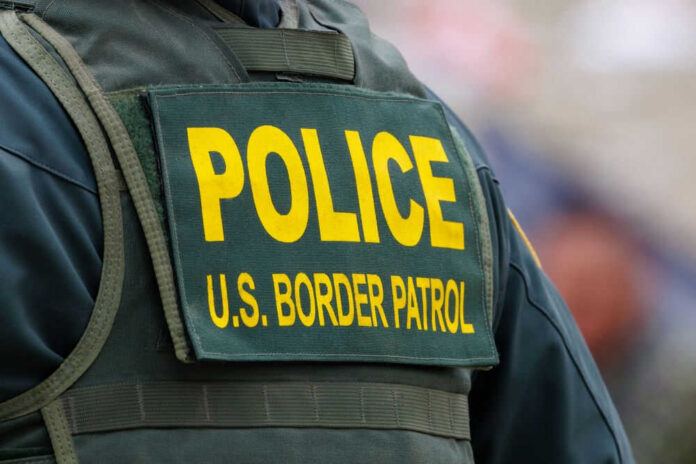
(NationalFreedomPress.com) – A new bill aims to stop elite Border Patrol teams from being “paperworked” into hesitation when terror or a mass shooting erupts in an American city.
Story Snapshot
- Rep. Tony Gonzales introduced the Homeland Threat Response Act (H.R. 7098) to clarify when CBP can assist state and local police during violent incidents.
- The bill targets legal gray areas that have exposed Border Patrol Special Operations Group units (BORTAC and BORSTAR) to scrutiny and liability after domestic deployments.
- Gonzales framed the push around major-event security, including Super Bowl planning, where rapid coordination is critical.
- As of mid-February 2026, the legislation has been introduced and referred to the House Committee on the Judiciary.
What H.R. 7098 Changes—and Why the Timing Matters
Rep. Tony Gonzales (R-TX) introduced the Homeland Threat Response Act, labeled H.R. 7098, to amend parts of federal law tied to the Homeland Security Act framework and related authorities governing CBP support to other law enforcement. The core purpose is simple: give CBP personnel explicit legal authority and liability protections to assist state and local agencies during mass shootings, terrorist attacks, and other violent incidents. The bill’s rollout was publicly discussed in early February and formally introduced on February 15, 2026.
Gonzales linked the push to major-event security needs—especially the Super Bowl environment—where agencies cannot afford confusion over who is allowed to do what in the first hours of a crisis. His public argument emphasized that highly trained responders should not be second-guessing themselves due to anticipated bureaucratic consequences after the fact. The available reporting does not show formal opposition in the cited coverage, but the proposal still must move through the House Judiciary Committee process.
The “Legal Gray Zone” Facing BORTAC and BORSTAR
CBP’s U.S. Border Patrol Special Operations Group includes BORTAC, a tactical unit, and BORSTAR, a search, trauma, and rescue capability. These teams have been used for counterterrorism, high-risk operations, and disaster response. The problem identified in the source material is not capability—it’s clarity. When these units assist in domestic incidents away from the border, their authority is described as ambiguous under current statutory structure, creating exposure to investigations and personal liability even when local officials request help.
This is the kind of government dysfunction voters have been tired of for years: Washington creates massive agencies, then leaves frontline operators stuck navigating unclear rules during real-world emergencies. The bill is presented as a targeted fix, not a new mission creation—bringing CBP’s special teams closer to the clearer statutory footing that other federal entities reportedly have when supporting domestic security operations. The research provided does not include a detailed cost estimate, but the change is described as primarily statutory rather than a large spending program.
Incidents Cited as Examples of Why Speed and Clarity Matter
The Gonzales press materials referenced several past incidents where Border Patrol special teams responded or supported operations and later faced questions about their role and authority. Those incidents included the 2019 El Paso Walmart mass shooting, the 2022 Uvalde school shooting, and the 2023 Cleveland, Texas shooting involving Francisco Oropeza. The list also included major manhunts in Pennsylvania in 2023, plus the 2023 Lewiston, Maine mass shooting where 18 people were killed.
Those examples underscore the practical policy question Congress is being asked to answer: when local law enforcement is overwhelmed by a rapidly unfolding crisis, should federal tactical and rescue assets be able to deploy immediately under a clear legal umbrella—or should they hesitate because lawyers might argue later that the statute wasn’t explicit enough? The sources do not provide a case-by-case operational record for each event, so readers should treat the incidents as illustrative context for the bill’s rationale, not as a complete after-action accounting.
Congressional Path and the Federalism Questions Conservatives Watch Closely
H.R. 7098 was referred to the House Committee on the Judiciary and is in its introductory phase in the 119th Congress. The research available does not report cosponsors, amendments, or a committee markup schedule. That means the immediate “news value” is less about final passage and more about the policy direction: codifying rapid, lawful inter-agency support during the worst moments—mass shootings, terror threats, and other violent attacks—without leaving responders exposed to personal risk for doing what leaders asked them to do.
For conservatives, the constitutional guardrails matter as much as security outcomes. The bill, as described in the provided materials, is aimed at enabling assistance to state and local law enforcement—not replacing them. Done correctly, that supports federalism by reinforcing local capacity rather than centralizing routine policing in Washington. The key limitation is that the current research set includes little outside analysis, so readers should expect the real debate—if it comes—to focus on how narrowly the authority is drafted and how oversight is handled once deployments occur.
Sources:
Rep. Tony Gonzales Introduces the Homeland Threat Response Act Ahead of Super Bowl
H.R.7098 – Homeland Threat Response Act (Introduced in House)
H.R.7098 – Homeland Threat Response Act (XML)
Copyright 2026, NationalFreedomPress.com