
Weeks before Election Day, explosive claims about Abdul El-Sayed’s “Muslim Brotherhood ties” dominated Michigan’s Senate race, even as multiple outlets reported no verified evidence.
Story Snapshot
- Mike Rogers and President Trump amplified accusations linking El-Sayed to the Muslim Brotherhood.
- El-Sayed repeatedly disavowed the group and denied personal and family ties.
- The most-cited “evidence” involves a 2012 post about El-Sayed’s mother and a letter touching Morsi-era politics, not proven affiliation.
- Major outlets said no evidence shows El-Sayed has ties to the organization.
What Sparked The Allegation And Who Is Pushing It
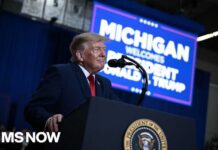
Republican Senate candidate Mike Rogers accused Democrat Abdul El-Sayed of ties to the Muslim Brotherhood during the final stretch of Michigan’s 2026 race. President Trump echoed the charge at campaign stops, turning it into a headline fight in a high-stakes contest. The campaign cycle timing mattered. Late October attacks leave little room to verify documents or context before voters decide. That timing favors loud claims over measured review.
Reporters traced the claim to two main items. First, a 2012 social post by a woman identified as El-Sayed’s half-sister allegedly said their mother had Muslim Brotherhood activism in the 1970s. Second, a 2012 open letter that El-Sayed reportedly signed supported some actions by then–Egyptian President Mohamed Morsi, whose rise was backed by the Brotherhood. Neither item shows that El-Sayed belonged to, funded, or worked with the organization.
What The Record Actually Shows And What It Does Not
El-Sayed has denied any personal or family ties and has publicly disavowed the Muslim Brotherhood, answering “Sure. Yes. Absolutely” when asked to do so. He also said he was not raised by his mother and called the social-media post hearsay that should not be treated as evidence against him. Major outlets reported that no evidence had been produced showing El-Sayed had any affiliation with the group, despite the repeated attacks.
The 2012 Morsi letter, as described in coverage, addressed specific policies in a chaotic period after Egypt’s revolution. Coverage said it included support for moves like changes to police and media. But the reporting did not include the full text, list all signers, or show a direct endorsement of the Muslim Brotherhood by El-Sayed. That gap limits what can be concluded from it.
How This Fight Fits A Larger Pattern In U.S. Politics
This dispute follows a pattern seen with several Muslim American candidates since 2001. Accusations often tie a candidate to a foreign group through relatives, old posts, or broad ideological claims. A Rutgers review documented repeated “loyalty” attacks in multiple cases over two decades. That pattern helps explain why these claims spread fast and stick, even when direct evidence is thin. It does not, by itself, prove a claim false, but it sets the context.
For voters frustrated with elites and partisan games, this story hits a nerve. Campaigns recycle fear, not solutions. Voters deserve documents, not slogans. If there is a real link, campaigns should publish full records: the complete 2012 post with metadata, the entire Morsi letter with organizers and signers, and any proven contacts or funding trails. If not, leaders should stop using faith and family to question basic loyalty. The country needs facts, jobs, safety, and trust more than another smear cycle.
Sources:
twitchy.com, apnews.com, washingtonpost.com, yahoo.com, reuters.com, rgj.com, detroitnews.com, palmbeachpost.com, pbs.org
© nationalfreedompress.com 2026. All rights reserved.