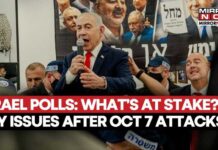

With neither bloc winning a majority, 19 seats held by Arab-led parties now decide who governs Israel — a power shift that forces long-avoided choices into the open.
Story Highlights
- No party reached the 61-seat majority; Arab-led parties hold 19 pivotal seats
- Record or high participation among Arab citizens made the mandate harder to ignore
- Both blocs face pressure not to partner with Arab parties, raising stalemate risks
- Key leaders set hard conditions on identity and security, narrowing coalition paths
Election Math Pushes Arab Parties to the Center of Power
Final tallies left Israel’s parliament split. Former Prime Minister Benjamin Netanyahu’s bloc won 53 seats, the main opposition bloc took 48, and Arab-led parties secured 19 in the 120-seat Knesset. Any government needs 61 seats. That makes Arab parties the hinge for either side to cross the line, or the reason the country returns to the polls if talks fail. Turnout rose, including strong Arab participation, adding weight to their share.
Coalition bargaining now runs through parties that many leaders long kept outside government. Reports describe tense talks and limited shared platforms so far. Negotiators must find common ground on budgets, policing, and rights, while war and security loom over every line. The arithmetic is simple, but the politics are not. If the blocs resist cross-aisle deals, the state could drift into another election cycle and deeper public fatigue.
Hard Lines on Identity and Security Narrow Options
Opposition leader Gadi Eisenkot said he would not form a government with Arab parties without clear conditions. Those include recognition of Israel as a Jewish state and labeling Hamas an extremist group. Netanyahu and his allies went further. They warned that any alliance with Arab-led parties would betray Israel’s Jewish character and endanger security. Such framing makes formal partnership risky for both blocs, even if the math demands it.
Arab-led parties also set terms. Reporting notes the Joint List rejects serving in a Zionist-led government and views Israel’s Jewish-state definition as discriminatory. One Joint List member said joining a coalition is not possible under the current Gaza war and West Bank settlement reality. These red lines collide with those of Jewish parties, tightening the space for a stable, shared program and raising the odds of only external support or no deal at all.
Historic Precedent Exists but Trust Remains Thin
Israel has rarely included Arab parties in government, but the 2021 coalition showed it can happen. The United Arab List, known as Ra’am, joined that government and leveraged its role to direct funds to Arab towns and push crime prevention efforts, while engaging in security briefings. That short-lived experiment proved inclusion is possible when leaders accept tradeoffs. It did not resolve the deeper identity dispute that now returns to center stage.
I looked at the numbers we have so far, of voting until 4 PM. By 16:00 on election day, 55.7% of Israelis had voted, against 47.5% at the same hour in 2022. That puts the country at 79% of its final 2022 turnout with six hours of voting left:
1) Negev Bedouin: 58.5%, already… pic.twitter.com/5ax3vCrRGH
— Shaiel Ben-Ephraim (@academic_la) October 27, 2026
The public’s core worry is familiar to Americans across party lines: a system that seems to protect insiders while ducking hard problems. Israelis now watch leaders argue over identity tests while crime, budgets, and security grind on. When 19 seats can unlock a government, but old taboos block talks, faith in institutions erodes. If leaders cannot square representation with security demands, Israel may face another costly vote and a deeper crisis of trust.
What to Watch Next
Watch for whether any bloc offers limited, issue-based deals rather than full coalition spots. Track if Eisenkot or Netanyahu softens conditions on recognition language or committee control to win outside support. Look for concrete budget and policing proposals aimed at Arab municipalities, which could build trust quickly. If none of this appears soon, expect fresh election chatter, louder street pressure, and a sharper debate over who defines the nation’s future course.
Sources:
theatlantic.com, apnews.com, nbcnews.com, timesofisrael.com, cnn.com, newindianexpress.com, france24.com, indianexpress.com, pbs.org, bbc.co.uk, britannica.com, jewishchronicle.timesofisrael.com, rte.ie, cambridge.org, nytimes.com
© nationalfreedompress.com 2026. All rights reserved.