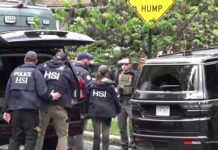

Israeli police said they arrested ten suspects before dawn after filmed attacks on a U.S. journalist and European diplomats in the West Bank, a rare hard move in a place where violence often goes unpunished.
Story Snapshot
- Police arrested ten suspects tied to recent settler attacks; questioning is underway.
- Washington Post photojournalist Heidi Levine was beaten by masked settlers; she needed surgery.
- Multiple security bodies joined the probe, including internal security and the military.
- Past data show most settler-violence cases end without charges, testing whether this push leads to trials.
What Police Say Happened and Why It Matters
Israeli police reported a pre-dawn sweep that brought ten suspects into custody for questioning over recent violence in the West Bank. Officials said the arrests relate to suspected assaults, violating a closed military-zone order, and illegal construction. They did not name the suspects or specify which person may be tied to which incident. Police said they are gathering evidence and witness testimony to support charges, not claiming that arrests alone prove guilt.
The crackdown followed widely shared footage showing masked settlers attacking Washington Post photojournalist Heidi Levine during a Palestinian olive harvest. Reuters reported she was hospitalized and underwent finger surgery after the beating. The arrests also connect to a separate incident in which European diplomats were attacked. Taken together, the two events created pressure for action from Israeli leaders and foreign governments, raising the stakes for a credible, thorough investigation.
Who Is Investigating and What Comes Next
Canadian public broadcasting reported that multiple branches took part in the probe, including the internal security service, the Border Police, and the Israeli military. Police described an ongoing effort to build an “evidentiary infrastructure” through on-scene work and interviews. That suggests this is more than a quick sweep. Still, authorities have not disclosed suspect identities, specific charges, or forensic links between any person and either attack, and they say the inquiry is active.
Reporters noted that the arrest list included offenses beyond assault, such as violating a closed military-zone order and illegal construction. That mix can happen in complex field raids, but it also makes it hard for the public to match a suspect to a specific violent act. Police emphasized that they are collecting “evidence, findings and testimonies” to support court action, signaling that prosecutors will need more than headlines to move cases forward.
The Larger Pattern During Olive Harvest Season
These arrests landed during olive harvest season, when tensions and attacks often spike. One rights group cited by the BBC said there were 269 incidents tied to the harvest in a recent 20-day span, including dozens of physical assaults and damage to trees and equipment. That seasonal surge shows why foreign diplomats travel to the fields and why one violent episode can quickly escalate into an international test of law enforcement and rule of law.
European Union reporting said the United Nations Office for the Coordination of Humanitarian Affairs tracked 1,828 settler attacks that caused casualties or property damage across the West Bank in 2025, averaging about five per day. Those incidents spanned roughly 280 communities and resulted in deaths and hundreds of injuries. The sheer volume shows how often small events snowball, and why arrests alone, while notable, are only the start of real accountability.
Accountability Gap: Why Results, Not Raids, Build Trust
Long-running data from the Israeli organization Yesh Din show that about 94% of investigations into settlers’ offenses against Palestinians since 2005 ended without indictments. That record looms over every new case. It explains why many observers, across political views, question whether swift arrests will become charges that stick in court, or fade as files close with no trial. The history shifts the focus from raids to whether prosecutors deliver tested proof.
🇮🇱 Ten arrests in a few days is good news, and I’ll say it plainly. Heidi Levine, an American photojournalist, was beaten in Abu Falah badly enough to end up with broken ribs, broken vertebrae and a finger that needed surgery, and a day later masked men went after French, Belgian…
— Herbert Potdevin (@HerbertPotdevin) October 19, 2026
This moment also hits nerves in the United States and Europe. Journalists expect to do their jobs without being beaten. Diplomats expect safe passage, even in tense areas. When they are attacked on camera or in convoys, it draws in foreign leaders who demand action. For American readers watching from afar, this is about something broader: does a system, any system, protect basic rights equally, or do the powerful bend rules until justice is only a press release and not a result?
Sources:
dw.com, lbc.co.uk, newarab.com, reuters.com, yahoo.com
© nationalfreedompress.com 2026. All rights reserved.