
America’s top diplomat called a leading human rights group “a fraud” after it urged probes of U.S.-Israeli strikes in Tehran that Amnesty International says may amount to war crimes.
Story Highlights
- Secretary of State Marco Rubio rejected Amnesty International’s war-crimes allegations and blasted its credibility.
- Amnesty says March 2026 strikes in Tehran killed and injured civilians and may be indiscriminate attacks requiring investigation.
- Amnesty has also documented Iran’s deadly crackdown on protesters and urged global accountability for Iranian officials.
- The clash spotlights a wider fight over who holds power to judge wartime actions and protect civilians.
Rubio’s Rebuke And The Immediate Trigger
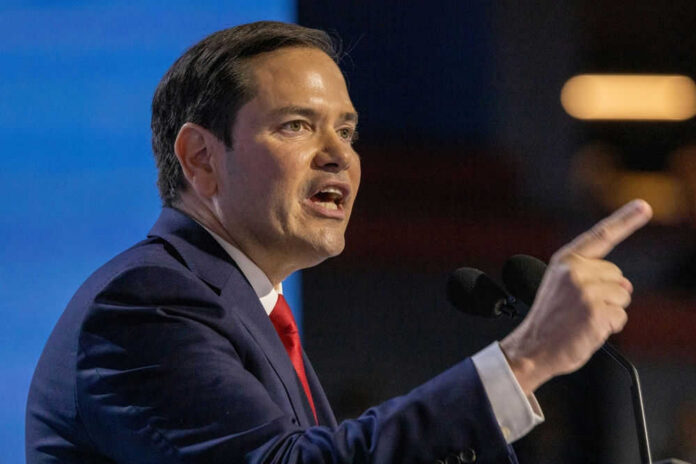
Secretary of State Marco Rubio pushed back hard after reporters asked about Amnesty International’s claim that U.S.-Israeli actions in Iran may be war crimes. Rubio said Amnesty is “a fraud” and argued the group should focus on Iran’s abuses against its own people instead of accusing America and its allies. His comments followed public pressure from activists who want accountability for airstrikes in crowded Tehran neighborhoods in March 2026.
Amnesty says its field work and open-source review point to three strikes that killed and injured dozens of civilians in densely populated areas. The group says the strikes may be indiscriminate and could amount to war crimes under international law, which requires taking all feasible steps to protect civilians. It called for independent, impartial, and transparent investigations to test those claims and identify responsibility if laws were broken.
What Amnesty Alleges About The Tehran Strikes
Amnesty’s briefing highlights damage patterns, reported casualties, and strike locations inside residential zones. It argues that the United States and Israel carried out armed attacks against Iran that may have failed to take required precautions to limit civilian harm. Amnesty wants investigators to review targeting choices, weapon types, and timing to see whether the attacks were indiscriminate. The organization also urges states to cooperate with any credible inquiry and preserve evidence for possible legal action.
These demands echo standard human rights playbooks used in past conflicts. When strikes hit urban areas, investigators compare military gains with civilian risks. They also test whether safer options existed and whether warnings were possible. Amnesty’s position is not a final verdict. It is a call to check the facts with access to data that only governments and militaries hold. The aim is to confirm or rule out alleged legal breaches tied to civilian deaths.
Amnesty’s Record On Iran’s Repression
Rubio’s charge that Amnesty should focus on Iranian abuses clashes with the group’s own recent work. Amnesty has published repeated reports on Iran’s deadly crackdowns since late 2025. It has documented unlawful killings, mass arrests, and torture claims. It has asked the United Nations General Assembly to set up a justice process to pursue Iranian officials who ordered or enabled crimes against humanity during protest crackdowns. Those reports name senior figures and ask for global accountability.
Marco Rubio Goes Full 'OH HELL YEAH' on Amnesty Intl. for Accusing America of 'War Crimes' in Iran https://t.co/Nmm7qUqxR7
— Meredith (@Mermaz) October 9, 2026
Amnesty’s coverage includes the “Woman, Life, Freedom” movement and the state’s harsh treatment of women and girls after Mahsa Amini’s death. It reports hundreds of unlawful killings, executions of protesters, and widespread abuse in detention. These records undercut the idea that the group ignores Iranian crimes. The same organization that flagged possible war crimes in Tehran also pressed the world to act against Iran’s rulers for severe human rights violations at home.
Why This Fight Resonates With Americans Across Parties
This dispute hits nerves that cross party lines. Many citizens see a pattern where powerful players dodge hard questions by attacking the messenger. Others think some non-governmental groups push claims fast and get facts wrong, which can smear U.S. forces without due process. Both worries point to a core demand: transparent facts, clear law, and one standard for everyone, whether they sit in Washington, Jerusalem, or Tehran. People want proof, not spin, when lives are at stake.
For conservatives, the fear is that activists criminalize U.S. self-defense and tie soldiers’ hands. For liberals, the fear is that leaders dismiss civilian harm and block outside oversight. For both, the deeper problem is trust. They see institutions — in government and advocacy — that can appear more focused on status than solutions. That fuels a belief that elites protect their own while ordinary people bear the costs of war, sanctions, and instability at home.
What To Watch Next: Evidence, Access, And Accountability
The next steps will hinge on evidence. Independent investigators would need access to strike data, target justifications, and weapon details. Iran controls the ground and runs a brutal security state, which can limit neutral access and poison witness accounts. The United States and Israel hold targeting records but often classify them for security reasons. That secrecy, even when legal, makes it hard for the public to judge competing claims fairly and feeds doubt on all sides.
Congress and allied parliaments can press for limited declassifications that protect sources but show enough to answer core questions. If evidence supports Amnesty’s claims, those responsible should face consequences under law. If it disproves them, governments should release what they can to clear the record. Either way, a credible process matters. It protects civilians in future fights and defends the honor of those who act within the rules. That is a goal the country should share.
Sources:
redstate.com, iranintl.com, diariocoimbra.pt, fr.jpost.com
© nationalfreedompress.com 2026. All rights reserved.