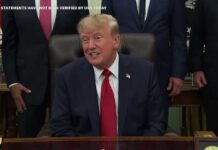

The White House removed CNN from the Air Force One press pool for President Trump’s Tennessee trip and tapped Real America’s Voice News instead, escalating a fight that now hobbles basic TV coverage of the presidency.
Story Highlights
- The White House signaled CNN would not fly on Air Force One for the Saturday trip.
- Guidance and reports say Real America’s Voice News took the TV pool slot.
- Major TV networks refused to backfill CNN, stalling the shared pool.
- A judge restored grounds access days earlier, but not travel assignments.
What changed on the Tennessee trip
On Friday night, the White House signaled CNN would be left off Air Force One for President Trump’s Saturday travel to Tennessee, interrupting CNN’s usual television pool duties. Guidance and reporting said Real America’s Voice News would ride instead, marking a clear switch in the rotating pool setup for this flight. Reuters reported the decision was shared to reporters as coming from people familiar with the matter, aligning with the late‑day guidance shift.
CNN had been scheduled as part of the television press pool, which is a small, rotating group that covers the president when space is tight and then shares video to all networks. That pool exists so Americans can still see what a president does when only a handful can travel. When the White House changes the assigned outlet, the move affects how that shared coverage flows to the public.
How this fits the broader media fight
This flight decision landed days after a federal judge ordered the administration to restore access to CNN, MS NOW, and Politico for White House grounds, citing a lack of due process in the earlier ban. The order covered entry to the complex, not Air Force One seating, leaving travel slots in a gray area for now, according to Associated Press reporting. That gap gives the White House legal room to argue travel assignments are separate, even as the larger lawsuit moves ahead.
Major television networks chose not to replace CNN in the pool after earlier bans, saying the shared system would pause rather than bless a new arrangement. That refusal means the traditional television pool is effectively stalled for events that require pooled coverage, limiting neutral video that all outlets could use. The breakdown feeds a cycle of mistrust: officials say they manage limited space, while media groups see pressure tied to coverage content.
Why both right and left see a problem
Conservatives and liberals often disagree on media bias, but both sides worry when government gatekeepers can shape which cameras get close. Supporters of the move may argue the White House can set credential rules and rotate slots. Critics say swapping CNN for a clearly ideological outlet looks like favoritism that weakens open scrutiny. The result is less shared footage and more curated content, which fuels claims that elites control access and dodge tough questions.
Trump White House bars CNN from Air Force One again, disrupting TV press pool coverage of President’s Tennessee trip
Source: Hindustan Times – World#Pakistanhttps://t.co/Bv1nEqRlGQ…
— Pak News – www.pak.news (@paknewsnow) September 26, 2026
Experts told Reuters that the Constitution bars punishing outlets for their viewpoint once the government opens an access channel, a principle now being tested in court. Until a final ruling, the risks are practical as well as legal. When pool coverage stalls, citizens lose a common feed of what their president does. That gap deepens distrust across the spectrum, and it undercuts a basic promise: government should serve the people, not manage what the people can see.
Sources:
cnn.com, abc17news.com, washingtonpost.com, apnews.com, reuters.com, bbc.com, fr.jpost.com, transcripts.cnn.com
© nationalfreedompress.com 2026. All rights reserved.