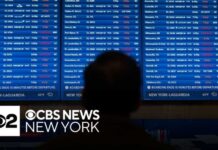

A nationwide ground stop froze every U.S. airport for more than four hours on Friday, stranding thousands of travelers and forcing sports teams to scramble for new travel plans after a telecommunications breakdown knocked out radar and communication links across the country’s air traffic system.
Story Snapshot
- The Federal Aviation Administration (FAA) halted all U.S. flight departures Friday after a telecommunications outage disrupted radar and communications nationwide.
- Transportation Secretary Sean Duffy said overloaded switches and routers caused inconsistent data, forcing the system shutdown.
- Homeland Security Secretary Markwayne Mullin said there was no indication the outage was a cyberattack or “nefarious.”
- Nearly 5,000 flights were affected before the ground stop lifted around 7:19 p.m. Eastern time.
- Government watchdogs have warned for years that aging FAA systems need urgent upgrades.
Flights Halted Coast to Coast
The FAA ordered every U.S. airport to stop departures Friday afternoon, telling the public the move came “out of an abundance of caution” after a telecommunications outage hit air traffic control communications. The agency said every flight already in the air had been accounted for during the shutdown. Airports from coast to coast ground to a halt, leaving passengers stuck in terminals with no clear timeline for when planes would move again.
Secretary Duffy said the problem hit “all Air Route Traffic Control Centers” and later described instability spreading through radar and communication systems at centers and regional approach facilities nationwide. Those centers manage high-altitude traffic across huge stretches of airspace, so a breakdown there ripples instantly through every connected airport, which explains why the stop applied everywhere at once rather than at a single hub.
Officials Point to Overloaded Equipment
Duffy gave reporters a technical explanation for the failure. “Our switches, our routers, actually got overloaded with data… and started to give us inconsistency in the data from those routers,” he said. “Because of that, we shut the system down”. Controllers facing unreliable radar and communication data had no safe way to keep tracking aircraft, so halting new departures became the only option to protect passengers already in the sky.
Homeland Security Secretary Mullin addressed fears of a cyberattack directly. He said there was “no indication” of anything “nefarious” behind the outage and no reason at that time to believe it threatened the country. His comments were limited to what investigators knew in the moment, a standard caveat officials use while technical reviews continue, and they do not change the core explanation both men gave for what caused the stoppage.
Thousands Scramble as Cancellations Mount
The disruption stretched over four hours before the FAA lifted the stop at roughly 7:19 p.m. Eastern time. Reports put the toll at nearly 5,000 canceled flights nationwide, with some accounts citing more than 3,500 affected aircraft and close to 1,000 delayed or canceled flights at two Texas airports alone. Travelers posted frustrated updates from gate areas, and sports teams flying for weekend games had to rework travel plans on short notice.
FAA back at "full operations" after Friday outage, Transportation Sec. says
Friday's nationwide FAA ground stop was caused by equipment Congress refused to modernize — and it could happen again.https://t.co/66IjjmdDbq#FeedCast #FAA #SeanDuffy pic.twitter.com/23QfcXf5ax
— FeedCast.news (@FeedCastNews) November 14, 2026
Duffy acknowledged the fallout would linger. He said it would “take time” for airlines to work through the backlog of delayed passengers and rebooked flights even after the system came back online. Airports that handle tight connection schedules, including major hubs, faced the toughest recovery because a few hours of lost departures can take a full day to unwind across a national flight network.
A Pattern Years in the Making
Friday’s stop was only the second nationwide ground stop since the September 11, 2001, attacks, with the first coming in January 2023 after a separate FAA computer system failure. That earlier breakdown pushed the agency to study the health of its entire technology base. Investigators found 51 of 138 FAA systems, or 37 percent, were “unsustainable,” with another 54 systems rated potentially unsustainable, according to a Government Accountability Office review of the agency’s own assessment.
That history gives weight to Duffy’s push for modernization funding, since the overloaded routers he described fit a broader pattern of strained, aging infrastructure flagged by watchdogs for years. For travelers stuck on tarmacs and families waiting at gates, the deeper question is not whether Friday’s outage was deliberate, officials say it was not, but whether the system behind it can keep holding together.
Sources:
youtube.com, abc7news.com, 6abc.com, cnn.com, nbcnews.com, stlpr.org
© nationalfreedompress.com 2026. All rights reserved.