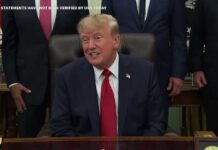

As President Trump’s war with Iran grinds on, his own words now blur the line between **self-defense** and **revenge**, raising hard questions about who this campaign really serves.
Story Snapshot
- Trump publicly frames the Iran air war as protection against “imminent” threats and years of aggression.
- At the same time, he promises Iran will “pay” many times over and even lays out revenge plans if he is assassinated.
- Threats to bomb power plants, bridges, and “take out” Iran in “one night” deepen fears of punitive destruction, not just defense.
- Shifting goals, from missile sites to regime change, fit a familiar pattern of Washington wars that start as protection and drift into something else.
Trump’s Stated Reasons: Defense, Deterrence, and “Epic Fury”
President Trump and his team say the air campaign is about keeping Americans safe and stopping Iran from becoming a nuclear power. The White House describes Operation Epic Fury as a “precise, overwhelming” effort to remove an “imminent nuclear threat,” destroy ballistic missiles, weaken proxy fighters, and cripple Iran’s navy. Officials link this to decades of Iranian support for attacks and terrorism. For many Americans worried about security, this sounds like classic tough talk backed by military power, not an emotional vendetta.
Trump’s public letters and speeches mostly repeat this self-defense theme. A letter to Congress says he ordered wide airstrikes to protect U.S. national interests and reduce Iran’s ability to hit Americans and allies. Major news outlets report that the administration formally leaned on the United Nations self-defense rule, Article 51, to justify the campaign in legal terms. This kind of framing fits a long pattern in Washington, where leaders stress protection and deterrence first, especially when lives have already been lost on both sides.
Revenge Language and Punishment Threats Raise Red Flags
Alongside the official language, Trump often talks in a way that sounds far more personal and punitive. In interviews and social posts, he has said that if Iran tries to assassinate him, the United States should “bomb them like never before,” at a level they have “never seen.” He has also warned that Iran will be “decimated and destroyed” if it carries out such a plot. This is not distant legal language; it is a direct promise of overwhelming revenge tied to attacks on him as a person, not just the country.
The same tone appears when Trump talks about deals and deadlines. He has threatened to “take out” Iran “in one night” and push the country “back to the Stone Ages” if it does not reopen the Strait of Hormuz and agree to his terms by a set hour. In that warning, he specifically mentions destroying power plants and bridges, which are key civilian infrastructure, not just military sites. That kind of threat alarms people on both the right and the left, because it sounds less like narrow defense and more like punishment meant to break a nation’s will.
Shifting War Goals Feed Public Distrust of Washington
Reporting shows that Trump’s goals for the Iran war have moved over time, which fuels fears of mission creep. Early on, aides talked about stopping missile attacks, protecting protesters, and limiting Iran’s help to groups like Hamas and Hezbollah. Later, sources described plans for much larger operations that could even aim to force out Iran’s top leaders and change the regime itself. This shift from protection to possible regime change looks familiar to many Americans who remember past wars that expanded far beyond their first promises.
News outlets also note that Trump’s reasons change from speech to speech. Some days he highlights nuclear danger and missiles. Other days he talks about shipping lanes, killing terrorists, or “liberating” the Iranian people from their rulers. Analysts have counted many different justifications used in just a few days of fighting. For citizens who already believe the federal government serves elites and defense contractors more than ordinary families, this kind of mixed messaging confirms their belief that Washington does not level with the public about war.
Defense or Payback? How Both Sides See the Same Strikes
Supporters of the campaign point to real Iranian attacks and threats. Reports describe strikes on U.S. bases, danger to shipping, and years of hostile behavior from Iran’s leaders. The U.S. military says it is hitting command centers, air defense batteries, missile and drone sites, and coastal surveillance posts to stop new attacks and keep the Strait of Hormuz open for oil and trade. For many conservatives, this matches a view that hard power is needed when diplomacy fails, especially after American soldiers have been killed.
US Central Command confirmed on Thursday that it had completed a thirteenth consecutive night of strikes on Iran, targeting military command centres, drone storage facilities, communications networks, coastal surveillance sites and maritime capabilities. Washington says the… pic.twitter.com/mAZqRZfBRm
— Gandalv (@Microinteracti1) July 24, 2026
Critics, including some Democrats in Congress, argue that Trump has crossed legal lines and let personal anger shape policy. Representative Ro Khanna says new strikes tied to Iran violate the War Powers Resolution and has warned of possible legal action if the war continues without proper approval. Independent fact-checkers add that some of Trump’s claims about Iran’s military and nuclear status do not match official intelligence assessments. This gap between rhetoric and confirmed facts deepens concern that anger and political theater, not clear necessity, are driving key choices.
Why This Matters for Americans Who Feel Betrayed by Elites
For many older conservatives, this conflict hits nerves around high energy prices, global instability, and a sense that past “forever wars” drained American strength without clear gains. For many older liberals, it raises fears about another war of choice, more civilian deaths, and a growing gap between powerful leaders and working families. On both sides, people see a Washington system that can mobilize thousands of strikes and billions of dollars faster than it can fix borders, schools, or hospitals.
Trump’s mix of legal self-defense language and raw talk of revenge fits a larger story about how modern leaders use force. The record shows real threats and casualties, but it also shows a president who talks openly about making Iran “pay,” bombing it “like never before,” and erasing its bridges and power plants if it defies him. That combination makes it easy for many Americans to feel that war has become another tool for the elites’ power struggles, while ordinary citizens bear the costs in taxes, uncertainty, and the risk of wider conflict.
Sources:
cnn.com, aljazeera.com, youtube.com, npr.org, cfr.org, theguardian.com, pbs.org, nytimes.com, newyorker.com, reuters.com, en.wikipedia.org
© nationalfreedompress.com 2026. All rights reserved.