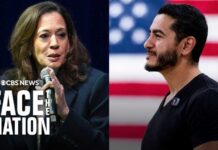

Republicans are attacking Abdul El-Sayed with his full legal name, and the move has triggered a fresh fight over identity politics and campaign honesty.
Story Snapshot
- Tim Scott said the National Republican Senatorial Committee is using El-Sayed’s full name in attack ads.
- CNN pressed Scott on whether the wording was meant to signal that El-Sayed is Muslim.
- Scott denied that charge and said the ads target El-Sayed’s positions and public record.
- Critics say the naming choice fits a wider pattern of coded political attacks.
What Scott Said on CNN
National Republican Senatorial Committee chair Tim Scott said the ads against Michigan Senate candidate Abdul El-Sayed are about El-Sayed’s record, not his religion. When CNN’s Manu Raju asked whether the full-name usage was meant as a hint that El-Sayed is Muslim, Scott answered, “Not at all,” and said voters should trust El-Sayed’s own words about being a “most dangerous candidate.”
Scott also defended the naming choice by saying he is often called “Timothy Eugene” and that public figures do get called by their full names. He then shifted to policy attacks, saying El-Sayed is sympathetic to Hamas and linked to Hasan Piker, and that Republicans want voters to focus on “what he stands for.”
Why the Name Choice Drew Attention
CNN’s questioning came from a simple point: El-Sayed usually campaigns as Abdul El-Sayed, not under his longer legal name. The network asked why Republicans would highlight the full version if the goal was only normal candidate identification. That framing gave Scott a chance to deny religious intent, but it also kept the focus on whether the wording carried a hidden message.
Other coverage said critics saw the ads as an Islamophobic tactic and pointed to the National Republican Senatorial Committee’s shift toward using El-Sayed’s full name. Reporters and commentators also tied the attack ads to claims about the Muslim Brotherhood and other identity-coded rhetoric, which made the naming choice look less like plain formality and more like a political signal.
What the Evidence Does, and Does Not, Show
The public record shows a real dispute over intent, but it does not include an internal campaign memo, ad script note, or media plan proving why the full name was chosen. That matters because Scott’s denial and the critics’ suspicion rest on different kinds of proof. One side has a public explanation. The other side has inference from tone, wording, and history.
[Video] El-Sayed is 'making it easier' for Republicans to win, Tim Scott says
Source: WCNC https://t.co/hHbpY3qfWk— Laurie Forrest (@ccchardonay) August 11, 2026
That gap leaves the larger story in a familiar place for American politics. Campaigns often use names, labels, and clipped attacks to shape how voters feel before they examine the details. Supporters call it tough messaging. Critics call it a coded appeal to bias. In this case, both reactions are rooted in the same public exchange, and neither side has produced full internal records to settle the issue.
Why It Matters Beyond One Senate Race
The El-Sayed fight fits a wider pattern that many voters on both sides already distrust. One camp sees another example of media overreaction to ordinary campaigning. The other sees a reminder that religion, ethnicity, and foreign-sounding names can still be used to stir suspicion while staying just vague enough to deny. That is why the clash landed so quickly and spread so widely.
For readers frustrated by Washington’s habits, the episode is another sign of how quickly campaigns reach for division. Scott’s defense was blunt and public. The critics’ reaction was just as blunt. What remains unresolved is whether the full-name usage was simple style, sharper opposition research, or something meant to activate bias without saying it out loud.
Sources:
twitchy.com, thehill.com, youtube.com, independent.co.uk, inkl.com, instagram.com, facebook.com, washingtonexaminer.com, yahoo.com
© nationalfreedompress.com 2026. All rights reserved.