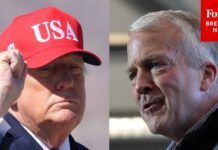

Army Secretary Dan Driscoll’s resignation, after months of clashes with Defense Secretary Pete Hegseth, signals a leadership crisis reaching the heart of U.S. military readiness.
Story Snapshot
- Army Secretary Dan Driscoll submitted his resignation after tensions with Defense Secretary Pete Hegseth.
- Reports tie the exit to Hegseth’s firings and blocked promotions of Army officers.
- Pentagon leadership also moved against Stars and Stripes editors, prompting a lawsuit.
- Officials defend merit-based decisions, rejecting claims of political or identity-driven motives.
What Happened: A Resignation Amid a Broader Shake-Up
Multiple outlets report that Army Secretary Dan Driscoll submitted his resignation to the White House after months of tension with Defense Secretary Pete Hegseth over personnel changes and Army priorities. Earlier reporting said he planned to step down by year’s end, but the timeline moved faster as disputes escalated. Politico and others tied the move to a period when senior Army and Navy leaders were removed or in flux, leaving key posts without Senate-confirmed leadership. The White House has not released a public letter.
The Atlantic and The New York Times reported that the conflict centered on Hegseth’s removals of combat-tested Army leaders and disputes over Army transformation and readiness. A source familiar with Driscoll’s thinking said he warned that firing the generals responsible for modernization would set back progress. The reporting relies on unnamed officials, which limits direct confirmation. Still, the accounts are consistent across major outlets and align with other public personnel moves during the same period.
Promotion Battles: Authority, Process, and Pushback
National Public Radio reported that Hegseth blocked promotions for four Army officers selected for one-star rank, while Pentagon officials argued the decisions were based on merit. A contemporaneous report said Secretary Driscoll refused to strike those officers from the list, citing their decades of service. Questions remain about exact legal authority and final outcomes, with the Pentagon calling the media accounts anonymous or inaccurate. The department insists promotions are apolitical and based on performance.
This fight over promotions goes to a core issue: who defines readiness and standards. Hegseth and his allies say the department is ending quota thinking and re-centering on lethality, accountability, and standards, which they argue supports warfighting outcomes. Critics inside and outside the Army warn that sudden, top-down interventions can choke off trusted pipelines and slow execution. The evidence so far shows a live struggle over process, not a clear public measure of readiness harm.
Stars and Stripes Flashpoint: Press Freedom and Command Influence
CNN reported that Stars and Stripes leaders, including the editor-in-chief and publisher, were fired, and that the journalists have sued, alleging First Amendment violations. Separate coverage said dismissals followed internal fights over editorial independence, with Pentagon officials framing the actions as responses to insubordination. This media clash does not prove the Army’s readiness is worse, but it points to tighter central control over information in the defense ecosystem during the same leadership turmoil.
The US Army is facing fresh leadership upheaval in the middle of the Iran war after Secretary Dan Driscoll submitted his resignation following months of reported friction with Secretary of War Pete Hegseth. The White House confirmed Driscoll’s departure on Monday, ending… pic.twitter.com/9PGottRMCY
— The Statesman (@TheStatesmanLtd) September 1, 2026
Together, the leadership exits, promotion blocks, and media firings reflect a wider contest over control. Civilian leaders have full authority over the military, but organizations that fight wars depend on continuity, trust, and open information flows. When turnover and directives mount at once, the system can slow down or make avoidable mistakes. That risk worries people on the right and left who see Washington’s elite fights as coming before the mission and the troops.
Why This Matters for Both Sides of the Aisle
Conservatives who want a tougher, more focused force may applaud a crackdown on bureaucracy. But even a merit push can backfire if it sidelines experience too quickly or blurs rules that keep politics out of the ranks. Liberals who fear politicization see warning signs in the promotion fights and the press dispute. Both camps share a core concern: if leaders burn down process to win a turf fight, the force that protects the country can lose time, talent, and trust when it is needed most.
What We Know, What We Do Not
We have credible reporting that Driscoll resigned and that disputes with Hegseth over personnel and priorities drove the break. We also have documented promotion interventions and public defenses of merit-based decisions by Pentagon spokespeople. What is missing is hard public data tying these actions to a measurable drop in Army readiness. Until resignation documents, readiness reports, or Inspector General findings emerge, the readiness impact remains an open question, even as the governance strain is clear.
Sources:
aljazeera.com, theatlantic.com, telegraph.co.uk, salon.com, time.com, cnn.com, npr.org, nbcwashington.com, thehill.com
© nationalfreedompress.com 2026. All rights reserved.