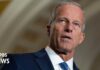

President Trump said he will declare the Strait of Hormuz a United States territory after defeating Iran, escalating a high-stakes standoff over a vital oil chokepoint.
Story Snapshot
- Trump vowed to declare the Strait of Hormuz a United States territory after the war with Iran ends.
- Trump also said the United States has “total control” of the strait, a claim Iran flatly rejects.
- Pentagon statements describe current operations as temporary escorts to protect shipping, not a sovereignty move.
- International law experts say the strait is an international waterway with transit passage rights, not subject to unilateral takeover.
What Trump Said And Why It Matters
On August 14, 2026, President Trump said he would declare the Strait of Hormuz a United States territory after Iran is defeated, calling Iran “badly defeated” and tying sovereignty claims to battlefield outcomes. Days earlier, he said the United States had “total control” of the strait, crediting the United States Navy and hinting at a blockade of Iranian ports. These remarks go beyond routine freedom of navigation language and raise questions about law, alliances, and energy prices.
Iran publicly rejected the control claim. Iranian officials said the strait is under Tehran’s management and that no vessel can transit without Iran’s permission. That direct denial creates a stark, on-the-record clash over who is in charge. This dispute lands on a waterway that moves a large share of the world’s oil. Sharp claims on either side can spook markets, draw in partners, and risk mistakes at sea that could widen the war.
What The United States Military Says It Is Doing
United States Central Command and Pentagon officials have framed “Project Freedom” as a mission to help merchant ships move safely after Iranian threats and attacks. They described it as defensive, focused, and temporary, aimed at protecting “innocent commercial shipping” and restoring safe passage. That language supports escorts and maritime security, not a change of borders or a new United States claim to own a strategic waterway.
That gap between rhetoric and mission matters for trust at home and abroad. Many Americans, left and right, already believe the federal government overpromises and underdelivers. When leaders talk about declaring territory while the military describes a time-bound escort, people hear mixed messages. Allies hear them too. Mixed messages can strain coalitions that the United States needs to keep sea lanes open without sliding into a wider, costlier conflict.
The Legal Reality Around The Strait
Most legal analyses describe the Strait of Hormuz as an international strait governed by rules of “transit passage.” Ships of all nations have a right to pass through without suspension, while Iran and Oman control their territorial seas alongside that right. Those rules do not grant the United States or any other distant power sovereignty over the strait. A unilateral claim to make it United States territory would face strong pushback abroad and in global courts.
Even supporters of a tougher line on Iran should separate three things: passage rights, naval presence, and sovereignty. The first comes from international law. The second comes from ships on station and rules of engagement. The third would require formal legal steps and broad recognition. The available record shows press remarks from Trump, but no presidential proclamation, statute, or treaty to change the strait’s status. Words have power, but law and recognition decide borders.
Why This Hits A Nerve At Home
Americans are tired of mixed goals overseas while prices rise at home. Conservatives see energy costs and supply chains squeezed when shipping lanes close. Liberals see the risk of another open-ended mission and the burden on working families. Both worry that Washington power brokers talk big, hide the legal fine print, and leave citizens to pay the bill. Clear aims, lawful tools, and honest timelines would help rebuild trust that many feel has been spent.
UKMTO reports this morning that two vessels were STRUCK in the Strait of Hormuz yesterday. This is likely to be yet more ADNOC vessels shuttling oil along the Omani Corridor under Project Freedom. This would bring the total Abu Dhabi National Oil Company tankers hit by Iran… pic.twitter.com/XvSfW0v2fj
— Brett Erickson (@BrettErickson28) August 14, 2026
Practical steps could cool the crisis without rewarding aggression. The United States can keep escorts focused on safe transit, publish the legal basis for actions, and align public words with military orders. It can also press partners who rely on Gulf oil to share the load. Transparency on goals and limits would show this is about open seas, not a land grab. That approach protects workers, drivers, and shippers while denying Iran a propaganda win.
Sources:
redstate.com, abcnews.com, reuters.com, youtube.com, katu.com, channelnewsasia.com, cnbc.com, wsj.com
© nationalfreedompress.com 2026. All rights reserved.